
Tacky
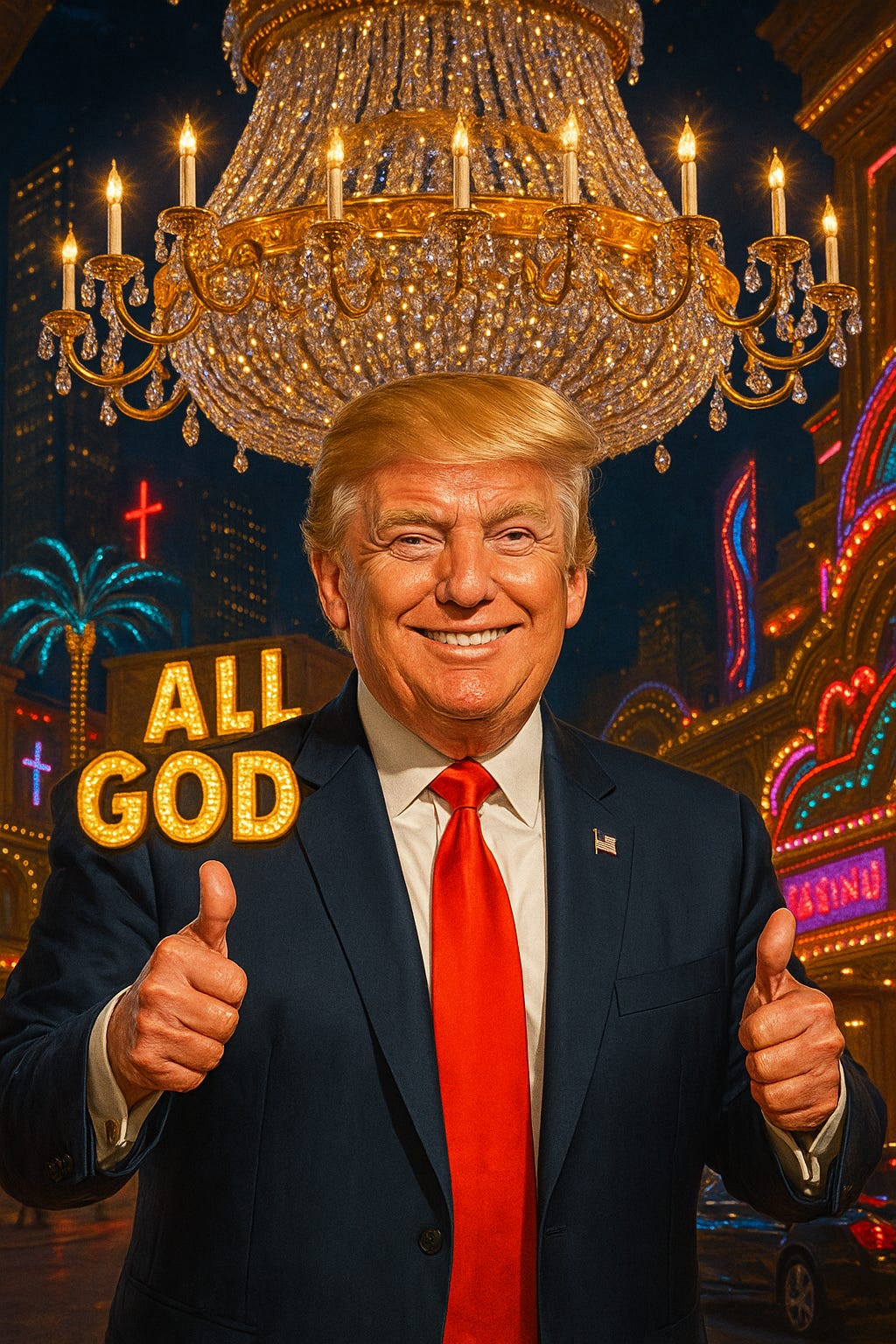
There is a texture to tacky. You feel it before you can name it. Plastic posing as crystal. Gold paint standing in for gold. Grandeur bought cheap and displayed loud. It wants applause without earning it. Attention without substance. And now, it’s everywhere.
Tacky used to live on side streets. It was a curiosity. A joke. You found it in Vegas lobbies and roadside shops selling ashtrays shaped like cowboy boots. You laughed. You walked on. It was contained. Harmless.
Now it runs the main road.
We once used “tacky” for design crimes — velvet Elvis paintings, fake marble counters, plastic chandeliers flickering in dim living rooms. Now it describes the architecture of the mind. Politics wrapped in rhinestones. Religion wrapped in flags. Wealth wrapped in logos so large they shout before the person wearing them speaks.
Tacky is aspirational.
There was a time when subtlety mattered. When taste worked quietly. When good things didn’t scream. Real craftsmanship had weight. Balance. Care. It didn’t need a neon sign. It didn’t need permission.
Tacky has no balance. It leans forward. Lunges. Demands to be seen from orbit.
Scroll any feed. Inflated lips. Painted faces. Manufactured lashes. Manufactured outrage. Filters stacked on filters until the face becomes a cartoon and the life becomes a set. Everything staged. Everything sharpened. Everyone selling something — even when it’s just a hollow version of themselves.
That isn’t confidence. That’s desperation under a ring light.
Tacky confuses volume with value. Shine with worth. Size with substance. It’s loud because it’s empty. And quiet would expose it.
Look at the new rich. Not the old, silent money. The loud ones. The ones who gold-plate their lives and broadcast every thought like a revelation. Rockets shaped like toys. Trucks that belong in bad science fiction. Logos designed to wound the eyes.
That isn’t innovation. It’s spectacle.
Old money built libraries. New money builds casinos that look like wedding cakes left in the rain. We traded taste for attention and called it progress.
Even suffering became tacky.
Grief filtered. Tragedy scored with music. War packaged as content. People film themselves crying, raging, praying — all with the same light in their eyes. Don’t help me. Watch me.
This isn’t taste anymore. It’s ethics at a discount.
Religion didn’t escape. What was once inward and quiet is now fog machines, credit card readers, and giant screens flashing Bible verses like lottery numbers. Pastors dressed like rappers. Sermons delivered like sales pitches. Blessings sold by the click.
If your church needs a gift shop, you’re not in a church.
Politics lives on tacky now. Giant flags draped over pickup trucks. Hats in violent colors. Slogans built for third-grade walls. Leaders who decorate themselves with symbols instead of substance.
Tacky loves shortcuts. The look of strength without the work. The look of success without the cost. The look of meaning without thought.
There is something honest about real ugliness. It doesn’t pretend. But tacky is a lie wrapped in glitter.
Foam stone facades pretending to be real. Fireplaces that never held fire. Kitchens bigger than hospitals, never used. Rooms arranged but never lived in. Square footage as performance.
We built a culture where appearance outranks experience. And we did it deliberately.
Marketing is the high priest of tacky. It takes insecurity, shrink-wraps it, and sells it back as identity. Whispers: buy this and you’ll finally be enough. Not smarter. Not kinder. Just brighter.
Tacky is exhausting. The angles. The posts. The lights. The staging. The endless work of being louder than the silence inside yourself.
Silence used to be strength. Now it’s treated as failure.
Taste was never about money. That’s the oldest lie. Taste is restraint. Knowing when to stop. Knowing when not to show everything. Real class is invisible to fools and unmistakable to those who understand it.
Tacky wants fools. That’s the market.
You see it in language. Everything “epic.” Everything “insane.” Everything “unbelievable.” We inflated words until they broke. When everything is extraordinary, nothing is.
Tacky hollowed language first. Then it showed up everywhere else.
The danger isn’t that things look cheap. It’s that thinking gets cheap. Standards erode so slowly people don’t notice until they’re gone.
When societies lose taste, they don’t just lose beauty. They lose judgment.
And once judgment is gone, anything shiny and loud can pass for truth.
That’s where we are. Living under plastic chandeliers. Telling ourselves they sparkle.
We weren’t meant for this. Humans didn’t cross oceans, build cities, write books, and bury their dead so we could worship fake gold and shout at mirrors.
Good taste doesn’t beg. It doesn’t trend. It doesn’t perform. It waits — quietly — for people quiet enough to find it.
Tacky will always win.
For a while.
Love it!!!